.png)
Flexofc Journal
Cafe vs. Coworking Space: Which Is Better for Your Daily Productivity and Budget?

While working from a cafe seems cheaper upfront, a coworking space can deliver higher daily output, reliable professional Wi-Fi, ergonomic comfort and acoustic privacy that justify the additional cost for many remote workers.
Two lattes and a sandwich may get you through a workday. But unstable internet, background noise and awkward client calls can cost you more in lost productivity than you realize.
The real question isn't simply “Where can I work for the lowest price?”
It's “Which environment helps me complete meaningful work without unnecessary expenses or distractions?”
For a freelancer editing videos, a founder taking investor calls or a remote employee attending back-to-back meetings, the answer may look very different. Let's compare both options based on actual working conditions, daily costs and the value of your time.
Working From a Cafe: The Real Cost and Productivity Reality
Cafes have become popular workspaces for freelancers, remote employees and digital nomads. They're accessible, casual and often require no membership. But the experience changes significantly when you use a cafe as your primary office.
The Advantages of Working From a Cafe
1. Low Initial Financial Barrier
You don't need a monthly membership or office agreement. Buy a coffee and find a table. For someone working occasionally outside the home, that's incredibly convenient.
2. Casual Atmosphere
Some people focus better with background activity around them. The sound of conversations, coffee machines and general movement can feel less restrictive than a formal office.
3. Easy Access to Food and Refreshments
You can order snacks, meals and beverages without leaving your workspace. For short work sessions, this convenience is a major plus.
A cafe works well when you need a quick change of environment without committing to a dedicated workspace. However, daily work introduces several practical problems.
The Disadvantages of Using a Cafe as Your Daily Office
Unstable Public Wi-Fi
Cafe internet may be sufficient for browsing and email. It isn't always reliable enough for large file uploads, video editing workflows or important client presentations. Connection speeds fluctuate heavily depending on customer volume and network capacity.
Limited Power Outlets
Finding a table is one thing. Finding a table near a working power socket is another. If your laptop battery lasts only a few hours, this becomes a genuine limitation.
Background Noise
Music, conversations, kitchen equipment and customer movement can interrupt deep work. A cafe may feel energetic at 10 AM and become impossible to work in during the lunch rush.
Awkward Breaks
Need to use the restroom or step outside for a call? You constantly have to worry about leaving your laptop unattended or losing your table.
Limited Call Privacy
Taking a confidential client call in a crowded cafe isn't ideal. You may struggle to hear the other person or find a quiet corner for sensitive discussions.
The “Cafe Guilt” Problem
Some cafes are comfortable with laptop users while others expect faster table turnover. Even when nobody asks you to leave, occupying a table for four hours after ordering one coffee can feel incredibly uncomfortable.
A cafe may be inexpensive per visit but inconvenient when you depend on it for eight hours of professional work.
The Hidden Economics of Working From a Cafe
Let's calculate what a typical cafe workday might actually cost if you stay for 7–8 hours.
Expense | Example Daily Cost |
Morning coffee | ₹180 |
Afternoon coffee | ₹180 |
Lunch or snack | ₹250 |
Additional beverage | ₹150 |
Total Daily Spend | ₹760 |
Note: These are estimates based on average spending.
If you work from a cafe 22 days per month:
₹760 × 22 = ₹16,720 per month
That's before accounting for commuting, mobile data backups or the cost of lost productive hours. You don't necessarily have to buy multiple coffees and meals every day, but the point is to calculate your actual spending rather than assuming a cafe is always the cheaper option.
Working From a Coworking Space: The ROI Breakdown
A coworking space is designed around work rather than customer dining. That fundamental difference affects everything from internet reliability to how comfortably you can spend an entire day at your desk.
The Advantages of Coworking Spaces
1. Professional Internet Infrastructure
Many established coworking operators provide business-grade connectivity with dedicated support and backup systems. For remote workers, this reliability prevents dropped meetings and interrupted workflows.
2. Ergonomic Seating
Working from a cafe means using wooden chairs and dining tables designed for short visits. Coworking spaces offer work-oriented desks and ergonomic seating built for extended sessions.
3. Quiet Zones and Phone Booths
Need to record a voiceover, attend a confidential call or concentrate on a complex task? Dedicated phone booths and quiet areas make a massive difference by separating focused work from collaborative activity.
4. Meeting Rooms
Coworking spaces provide bookable meeting rooms for client presentations, interviews and team discussions. Some memberships include room credits while others charge separately.
5. Professional Networking
You naturally meet founders, consultants, designers and other professionals. For freelancers and entrepreneurs, these organic interactions can occasionally lead to referrals or collaborations.
6. No Table-Camping Guilt
You aren't occupying a restaurant table intended for dining customers. You have full right to a workspace built for professional use. That psychological difference matters when you're working a full day.
The Disadvantages of Coworking Spaces
Higher Upfront Cost
A day pass or monthly membership generally costs more than buying a single coffee. Depending on the location and operator, a hot desk day pass may cost anywhere from a few hundred rupees to significantly more.
Membership Commitments
Some plans require monthly subscriptions or minimum commitments. If you only work outside your home twice a month, a recurring membership may not make financial sense.
Shared Environment
Coworking spaces can still become noisy or crowded. The quality of your experience depends heavily on desk density, space planning and how the operator manages its community.
The Productivity Value Equation
Here's a practical way to evaluate the cost. Suppose a coworking day pass costs ₹700.
You use the space for eight hours and gain just two additional productive hours compared to working in a distracting cafe. If your effective working value is ₹500 per hour, those two hours represent ₹1,000 in potential productive output.
The pass costs ₹700. That doesn't automatically mean you've earned a ₹300 profit, but it highlights an important principle: The value of a workspace isn't limited to its rental price. It also depends on what you accomplish while using it.
For a freelancer who bills by the project or an employee handling tight deadlines, better focus easily justifies a higher daily workspace cost.
Cafe vs. Coworking Space: Side-by-Side Comparison
Parameter | Coffee Shop / Cafe | Coworking Space (Day Pass) |
Average Daily Cost | Lower for short visits but varies heavily with food purchases | Higher upfront but structured around full workspace access |
Wi-Fi & Security | Public network quality varies; security is often low | Business-oriented connectivity with operator-managed access |
Privacy & Calls | Usually limited with high background noise | Phone booths and meeting rooms are usually available |
Ergonomic Setup | Dining furniture designed for shorter stays | Work-focused desks and supportive seating |
Networking | Limited and incidental | High opportunity to meet working professionals |
Focus Duration | Suitable for short sessions and casual tasks | Built for extended work sessions and deep focus |
Power Access | Outlets are often scarce | Power access is planned around every workstation |
Best Use Case | Casual work, creative breaks and short tasks | Focused work, client calls and full-day productivity |
The Decision Matrix: When Should You Use Which?
Instead of choosing based on trends, match the environment to your actual daily requirements.
Use a Cafe When:
You're working for 1–3 hours.
You just need a quick change of scenery.
Your tasks don't depend on heavy internet usage.
You have zero video meetings scheduled.
You enjoy a casual atmosphere.
Best suited for: Casual freelancers, students, digital nomads and professionals taking short breaks.
Choose a Coworking Space When:
You're working remotely for most of the day.
You attend frequent client or team calls.
You need reliable internet for professional workflows.
You require quiet zones or privacy.
You regularly meet clients face-to-face.
Best suited for: Full-time remote employees, consultants, startup founders and distributed teams.
Consider a Hybrid Approach
You don't have to choose just one. Many professionals mix their environments based on the day's schedule:
Workday | Recommended Environment |
Monday: Deep project work | Coworking space |
Tuesday: Light admin tasks | Home office |
Wednesday: Client meetings | Coworking space |
Thursday: Creative brainstorming | Cafe |
Friday: Team collaboration | Coworking space |
This approach allows you to spend money on professional infrastructure when it matters and save costs when it doesn't.
How FlexOFC Helps You Find the Right Workspace
Finding a coworking space shouldn't require calling multiple operators just to discover day pass prices or check if they have phone booths.
FlexOFC helps you discover and compare verified flexible workspaces with total transparency around pricing, workspace types and available facilities. As a zero-brokerage workspace discovery platform, we help freelancers, remote employees and businesses explore options across major cities without hidden broker markups.
You can use FlexOFC to look for:
Hot desk day passes
Flexible coworking memberships
Private workspaces
Meeting-friendly environments
Workspaces that match your specific budget
Instead of choosing a workspace based on assumptions, compare your options and decide what fits your daily routine. Visit FlexOFC to discover flexible workspaces that support the way you actually work.
Frequently Asked Questions
1. Is a coworking day pass cheaper than buying food at a cafe all day?
It depends entirely on your spending habits. If you purchase multiple coffees, meals and snacks at a cafe, your daily expenses will easily approach or exceed the cost of a coworking day pass. If you only buy one inexpensive black coffee, the cafe costs less upfront. Always compare your complete daily spending against the day pass price.
2. How do you take confidential client calls when working in a coffee shop?
Cafes offer very limited privacy. If you regularly handle sensitive client information, you should use a coworking space with private phone booths. If you absolutely must take a call in a cafe, use noise-canceling headphones and move outside if possible.
3. Can I try a coworking space for one day before buying a membership?
Yes. Many coworking operators offer day passes or trial access so you can evaluate internet performance, noise levels, seating comfort and meeting facilities before committing to a monthly plan.
4. Is working from a cafe more productive than working from a coworking space?
Productivity depends on your work style and task requirements. Some people thrive with cafe background noise for creative tasks. However, for structured workloads requiring internet stability and focus, coworking spaces generally yield higher productivity.
Final Takeaway
A cafe is a great choice for a quick work session, a creative break or a low-cost change of scenery. However, a coworking space offers far greater value when you need reliable internet, professional privacy, ergonomic comfort and uninterrupted focus throughout the day.
The cheapest place to sit isn't always the cheapest place to work. Compare your daily spending, evaluate how much focused work you actually need to get done and choose the environment that delivers the best return on your time.
Need Help With This Topic?
Talk to the Flexofc team
If this article sparked a question about coworking, coliving, managed offices, or the right workspace setup, contact us and we'll help you narrow the best next step.
Contact UsRecommended for you
Oct 9, 2026
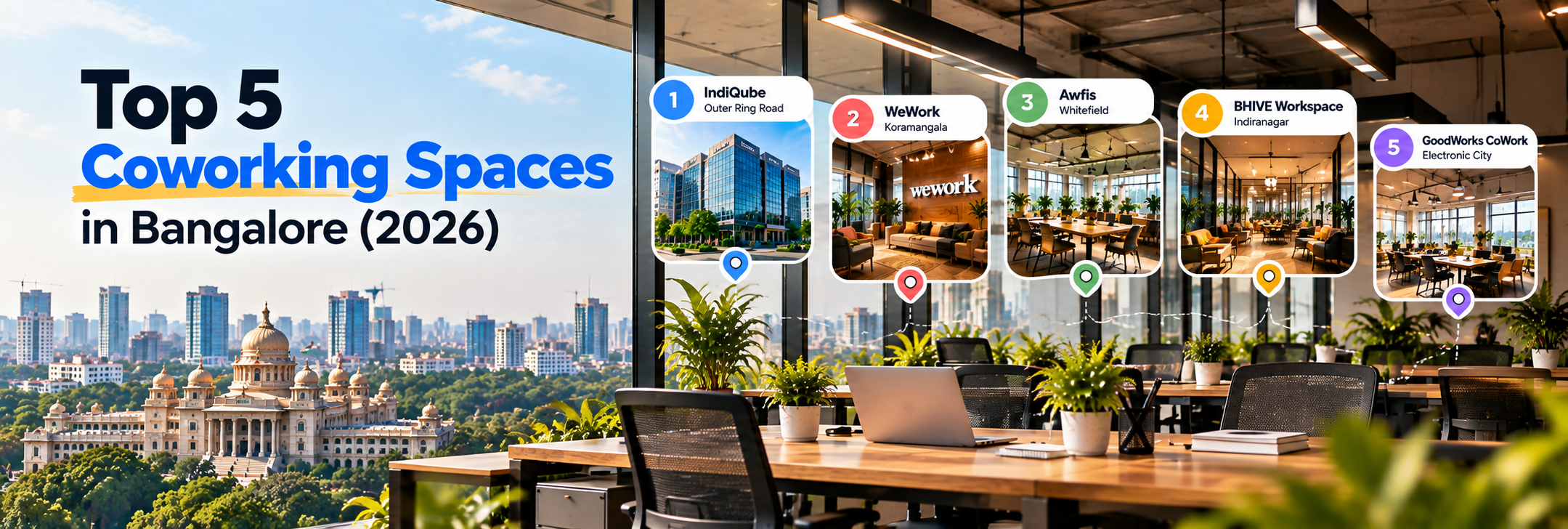
Top 5 Coworking Spaces in Bangalore: 2026 Guide
Looking for the best coworking spaces in Bangalore? Explore the top 5 options, compare locations, am...

Oct 8, 2026
Top 10 Coworking Spaces in Delhi (2026): Areas & Best Picks
Delhi-NCR's flex office market hit a record in 2026, with operators taking 45% of Q2 leasing. This g...

Oct 7, 2026
Top 10 Coworking Spaces in Gurgaon (2026): Prices, Locations & Amenities Compared
Compare 10 leading coworking spaces in Gurgaon by indicative desk pricing, micro-location, metro acc...